Click here to follow my work on ResearchGate.
Working Papers
Job Market Paper: An Associational Advantage? Public Trust and Urban Governance in Delhi, India (pre-analysis plan)
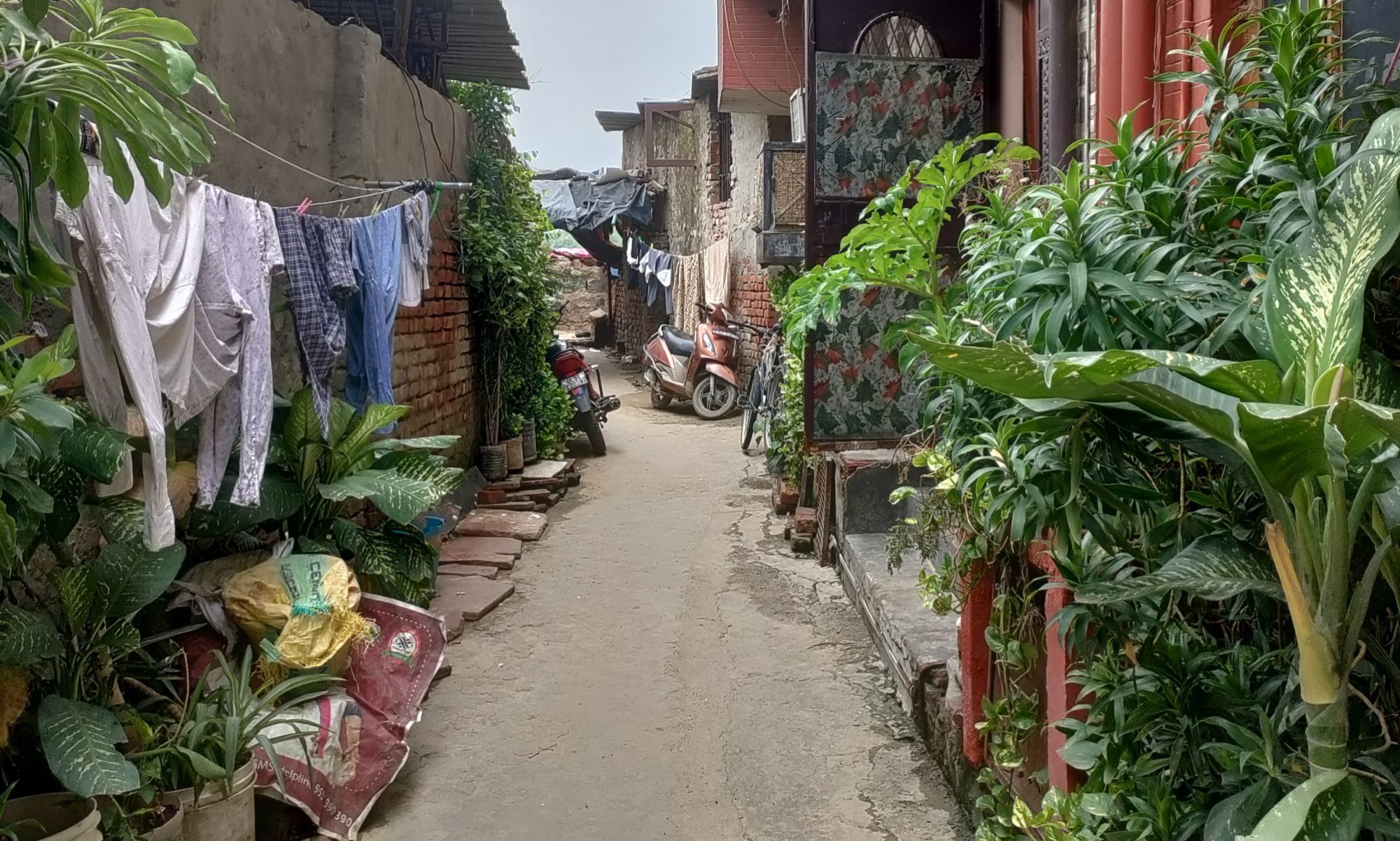
Abstract: Rapid urbanization in cities across the Global South intensifies governance challenges, particularly within informal settlements where basic municipal services are inconsistently delivered. Conventional understanding links political trust directly to effective government performance, yet this relationship fails to fully explain the persistence of trust in local institutions amidst evident service deficits. This study, grounded in 15 months of qualitative fieldwork and a survey-embedded vignette experiment involving 1,102 residents across 30 unauthorized colonies in Southeast Delhi, India, highlights how neighborhood associations, perceived as credible intermediaries, significantly influence residents’ trust in local governance through the mechanism of sunwai or informational audience. Findings underscore the “associational advantage,” whereby neighborhood associations amplify positive performance signals and buffer negative experiences, sustaining trust even in contexts of chronic governmental shortfall. This study contributes to understanding how localized social and institutional interactions shape political trust, offering insights critical for enhancing democratic legitimacy and governance efficacy in rapidly urbanizing megacities.
Conference presentations:
Accepted for presentation at the MPSA Conference, April 3-6, 2025 in Chicago, Illinois.
Accepted for presentation at the APSA Annual Meeting, September 5-8, 2024 in Philadelphia, Pennsylvania.
Earlier versions presented at:
- Annual Convention of the International Studies Association (ISA), April 3-6, 2024 and the ISA Global South Author Symposium, April 2, 2024, San Francisco, California.
- Annual Meeting of the Western Political Science Association (WPSA), March 28-30, 2024, Vancouver, Canada.
- CECD/CSDC Graduate Student Conference, March 8-9, 2024, Quebec City, Canada.
- Annual Meeting of the American Political Science Association (APSA), to be held August 31 – September 2, 2023 in Los Angeles, California.
- Inaugural Elections, Public Opinion and Voting Behavior Conference , March 2-4, 2023, Tallahassee, Florida.
- Telling It Like It Is 2.0: Descriptive Research Workshop, October 28-29, 2022, Boston, Massachusetts.
- Lightening Rounds session at the Annual Meeting of the American Political Science Association (APSA), September 15-18, 2022, Montreal, Canada.
What’s in an interview? Follow-ups as “moments” of clarity and information in qualitative design
Abstract: Qualitative interviews are indispensable in multi-method research for exploring complex human experiences and relationships. Semi-structured interviews are especially useful for political scientists working in contexts where descriptive richness and understanding of local context are crucial. They are also utilized extensively by graduate students working on multi-method projects. Despite an extensive body of literature dedicated to crafting and conducting qualitative interviews, the issue of asking follow-up questions to aid interviewee clarity and reciprocity remains fraught. Should they be pre-designed or spontaneous? To what extent can institutional review boards oversee researchers’ use of the latter?
Based on 11 months of fieldwork in Delhi, India working with poor residents living in informal settlements, I find that pre-designing follow-ups cannot account for the gamut of responses during semi-structured or unstructured interviews with vulnerable populations. However, relying on spontaneity alone may compromise data quality. The paper presents a novel approach for researchers to systematically identify “moments” necessitating clarification in interviews, using a combination of clarity probes and information loops. Real-world interviews from a diverse set of interviewees demonstrate the practical application of this method, revealing its capacity to unveil hidden nuances and foster interviewee engagement.
Conference presentations:
Accepted for presentation at the Advances in QMMR Workshop, June 21, 2025 at Syracuse University in Syracuse, New York.
Accepted for presentation at the MPSA Conference, April 3-6, 2025 in Chicago, Illinois.
Accepted for presentation at the Third GSCIS Author Symposium held as a pre-conference workshop at the ISA Annual Convention, March 2-5, 2025 in Chicago, Illinois.
Accepted for presentation at the Emerging Methodologists Workshop (EMW) pre-conference program of the APSA Annual Meeting, September 4, 2024 in Philadelphia, Pennsylvania.
Other Works In Progress
Public Goods and Public Trust in Government: Evidence from India
Abstract: In modern liberal democracies, the relationship between citizens and their governments is influenced by myriad factors that shape how citizens perceive the state as well as the act of governance itself. One of the ways governments might try to gain favor with their citizens is the provision of public goods, which is considered economically efficient as well as morally necessary (Anomaly 2015). Despite huge public expenditure on services such as healthcare, education, sanitation, electricity and water supply, we know very little about whether access to public goods leads to public trust in government. Such a connection is logical — the provision of public goods is an important aspect of ‘good governance’.
I test this assumption in India, a highly diverse liberal democracy that is characterized by socio-economic variations between states as well as huge disparities in income and access to basic services, where the provision of such services by the government can influence public confidence or trust in the government. I define provision in terms of availability of basic public goods to households at the state level in India, and drawing on earlier work I measure public trust in terms of the confidence people have in their state governments in India to take care of their basic needs. Using cross-sectional survey data, I show not only that the provision of public goods is associated with increased trust or confidence in state governments, but that access to health, education, sanitation and water supply are the most important such public goods. The findings have the potential to inform policy choices about the provision of public service programs in India as well a broader understanding of the relationship between public services and trust in government.
Conference presentations:
- Presented at the 2nd edition of the International Workshops on Public Policy at La Facultad Latinoamericana de Ciencas Sociales (FLASCO) Ecuador / Quito from 1st – 3rd July 2020 (cancelled due to COVID-19).
- American University Tri-School Conference, 5th March 2021 in Washington, D.C.
- 5th International Conference on Public Policy (ICPP5) held July 5th-9th, 2021 in Barcelona, Spain.
- Annual Meeting of the American Political Science Association (APSA) held September 30th – October 2nd, 2021 in Seattle, Washington, USA.
Analysis of News Media Coverage Before and After the March 2020 Nationwide Lockdown in India
Abstract: The COVID-19 pandemic has ravaged the world. In India, it has revealed deep inequalities that persist in access to healthcare services in the country and the precariousness of the informal economy which was hit hard by a nationwide lockdown announced in late March 2020. The lockdown resulted in an unprecedented mass movement of people across the country, notably migrant workers in megacities such as Delhi. We know that such nationwide lockdowns have been covered extensively by the media in various countries, and India is no exception. However, we know very little about the nature of such coverage in India. What were the key topics emphasized by news outlets while reporting on the COVID-19 first wave in India, and were there significant differences in coverage before and after the lockdown was imposed on 24th March 2020?
Using the CRISP-DM approach, this paper identifies the key themes discussed across reports from one major English news aggregator – Inshorts. A text analysis of news reports from this highly popular news source reveals the pre-dominant media attitudes that shaped how the crisis was reported, taking on a communal nature that targeted the Muslim community. The paper contributes to a burgeoning literature on the role of media during crises, and the critical role it plays in shaping citizen attitudes as well as government policies.
Conference presentations:
- 5th annual Politics and Computational Social Science (PaCSS) conference held June 16th-18th, 2022 at the Institute for Quantitative Social Science, Harvard University in Boston, MA.
- Accepted for presentation at the APSA Pre-Conference in Political Communication to be held in Montreal, Canada in September 2022.
 Shagun Gupta